
Ignition Won't Turn? Houston Ignition Repair vs. Replacement
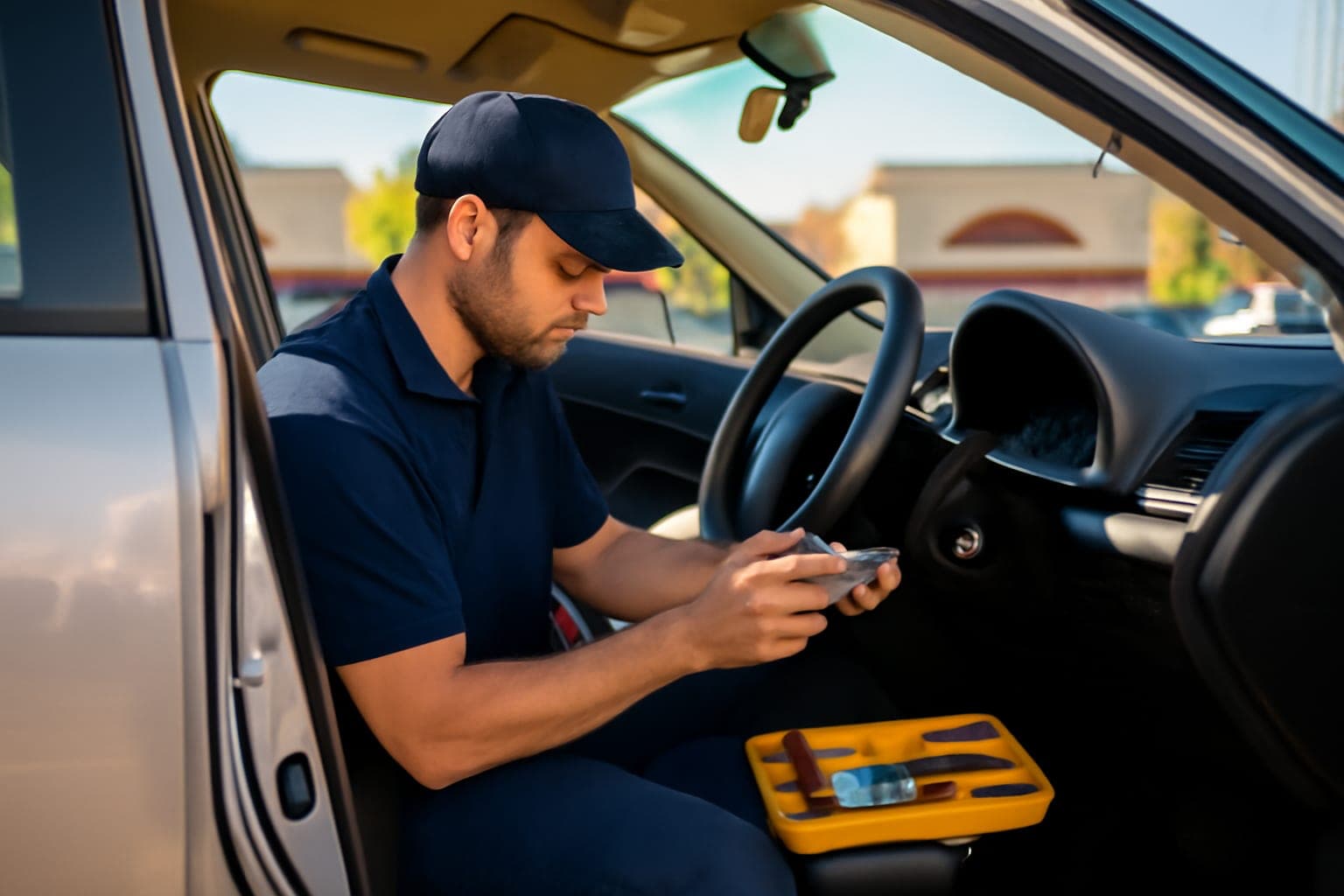
Last Tuesday I met a driver in a Kroger parking lot off Westheimer. Her key went in fine, turned a quarter inch, and stopped. She had already tried wiggling the wheel, swapping to the spare, and (she admitted) a little WD-40. Nothing.
She assumed she needed a new ignition. She did not. Forty minutes after the call, I had the cylinder out, rebuilt, and she drove home on her original key.
That job is the whole point of this article. "Key won't turn in ignition" is one of the most common calls we take in Houston, and most people guess wrong about what it is going to take to fix it. Here is how I decide between ignition repair and ignition replacement, and how you can get a rough idea before you call.
First, Rule Out the Things That Are Not the Ignition
Before anyone touches the lock cylinder, three quick checks:
1. Steering wheel lock. If you parked with the wheels turned, the column lock may be loaded against the key. Turn the wheel gently left and right while applying light pressure to the key. This solves a surprising share of "stuck ignition" calls and costs nothing.
2. Try the other key. If your spare turns and your daily key does not, the ignition is fine. Your key is worn. Cutting a fresh key from code, not from the worn copy, usually ends the problem.
3. Shifter position. Automatics must be fully in Park. A shifter resting half a notch out will keep the key from turning or from coming out.
If none of that works, the problem is inside the ignition itself. Now the real decision starts.
What Is Actually Failing Inside an Ignition
An ignition is two systems stacked together:
- The lock cylinder — the mechanical part. Spring-loaded wafers line up with your key's cuts and let the cylinder rotate.
- The ignition switch — the electrical part behind the cylinder. It sends power to the starter and accessories when the cylinder rotates.
Almost every "key won't turn" complaint is in the cylinder. Houston heat, humidity, a decade of keychain weight, and tiny bits of debris wear the wafers down until one of them binds. When a wafer binds, the cylinder refuses to rotate. Force it and you crack a wafer or snap the key, which turns a repair into a bigger repair.
Switch problems feel different: the key turns freely but the car does nothing, or the dash lights flicker when you jiggle the key. That is usually a switch issue, not a cylinder issue.
When Ignition Repair Is the Right Call
Repair means I remove the cylinder, strip it, replace the worn or broken wafers and springs, clean it, and reinstall it. Your existing key keeps working. For most vehicles I do this on the spot, in your driveway or parking lot, in under an hour.
Repair makes sense when:
- The key turns part way and binds, or feels gritty going in.
- The key only turns after a lot of wiggling.
- A key has broken off inside and the cylinder is otherwise healthy.
- The vehicle is older and a dealer-ordered ignition assembly would take days.
Repair preserves one thing people do not think about until it is gone: one key for everything. Replace a cylinder with a generic unit and you can end up with a separate key for the ignition and the doors. Rebuilding avoids that.
When Ignition Replacement Is the Smarter Call
Sometimes a rebuild is throwing good money after bad. I recommend replacement when:
- The cylinder housing is cracked, usually from someone forcing a key or from an attempted theft.
- The cylinder has been rebuilt before and failed again.
- The ignition switch has failed, and the vehicle uses an assembly where the switch and cylinder come as one unit.
- Theft damage has chewed up the column so badly that a rebuilt cylinder would not seat properly.
When I replace, I re-pin the new cylinder to match your existing key wherever the vehicle allows it. You still get one key. That step is what separates a locksmith from a parts-swap.
The Transponder Wrinkle Most People Miss
On anything newer than roughly 2000, your key has a chip in it. The ignition has an antenna ring around the cylinder that reads that chip. Replace the cylinder incorrectly and the car will crank but refuse to start, because the antenna ring was damaged or the new key was never registered.
This is where car key programming and ignition work overlap. If a replacement means a new key blank, that key needs to be programmed to your vehicle's immobilizer. We carry the programming equipment in the van, so an ignition replacement and the programming happen in the same visit. You should never have to drive (or tow) to a second appointment for this.
What to Do Right Now If Your Key Is Stuck
- Stop forcing it. Every extra ounce of pressure risks snapping the key, and a broken key inside a bound cylinder makes the job harder.
- Do not spray lubricant into the cylinder. Graphite is marginal at best; oily sprays attract Houston dust and make wafers stickier within weeks.
- Try the steering wheel and shifter checks above.
- Call a mobile locksmith, not a tow truck. Nearly all ignition repairs happen where the car sits. Towing to a dealer adds cost and a day of waiting for something that can usually be solved in your driveway.
Repair vs. Replacement at a Glance
| Symptom | Likely Fix | | --- | --- | | Key turns partway and stops | Repair (wafer rebuild) | | Key only works with wiggling | Repair, plus a fresh key cut to code | | Key broke off inside | Extraction, then repair if cylinder is sound | | Key turns but nothing happens | Switch diagnosis, possible replacement | | Cracked housing or theft damage | Replacement, re-keyed to your key | | Car cranks but will not start after prior work | Transponder programming |
How We Handle Ignition Calls in Houston
We dispatch from mobile units across Houston and the surrounding suburbs, with an average arrival time of 40 minutes. The technician looks at the cylinder before quoting, tells you which of the two paths you are on, and gives you the number before any work starts. If a rebuild will hold, that is what we recommend, even when a replacement would be a bigger ticket.
You can read more about what the service covers on our ignition repair page, or call us directly and describe what the key is doing. Nine times out of ten I can tell you over the phone whether you are looking at a rebuild or a swap.
Your key should not fight you. If it does, do not fight back. Call.
Need a Professional Locksmith?
Don't let a lock issue ruin your day. Houston Key Rescue is here to help with honest pricing and fast service.